Aluminum vs Steel Floor Jack: Weight, Durability and Price Compared
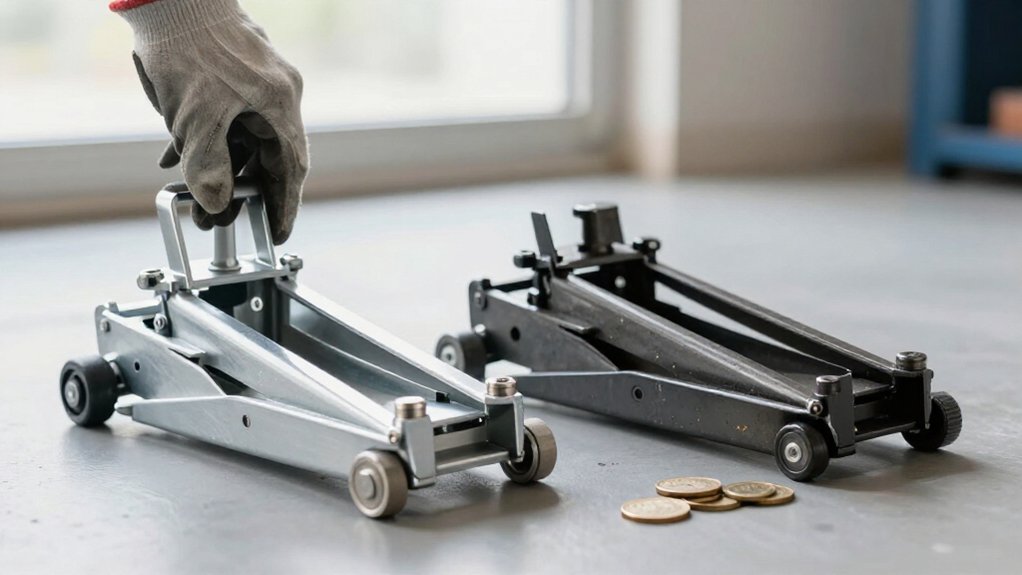
Choose your floor jack by matching its rated capacity and saddle height range to your vehicle and lift-point access. Aluminum frames and handles can weigh less and make repositioning easier, while steel models usually cost less.
Neither material alone determines lift speed or overload resistance; hydraulic design and rated limits matter. Check wheel movement, corrosion exposure, and serviceability, then use properly rated stands. Compare prices at equal capacities; you’ll find more factors shape the choice.
Saddle Height Range
Saddle height, not jack material, determines whether the pad can reach your vehicle’s lift point. Compare minimum pad height with your vehicle’s clearance and the lift point’s access path; maximum lift height describes a separate measurement. A 3.8-inch starting height can fit low cars, while an 11-inch minimum means you can’t position the jack. Match the saddle to your stands’ minimum height and the job’s access points.
| Minimum pad | Practical implication |
|---|---|
| 3.8 in | Low-profile access |
| 5.3 in | Often suits average vehicles |
| 11.0 in | May not clear low cars |
| 19.5 in | Maximum lift example, not starting height |
For driveway oil changes, 5.3 inches may suffice on average vehicles; confirm clearance before selecting a jack. Check the specification first. Always verify.
Jack Construction Materials
Although aluminum and steel describe a jack’s main frame and handle, they don’t necessarily describe every component: steel remains common in the hydraulic ram, pins, bearing surfaces, and fasteners. That means you should assess the complete design, not infer lifting safety from frame material alone. Check the rated capacity and use the jack only within that limit.
- Aluminum frames and handles reduce mass; one 2-ton model weighs 46.5 lb, while steel examples can exceed 87 to 93 lb.
- Steel often costs less at a comparable capacity; aluminum commonly carries a premium for lower weight.
- Mixed-material designs may feel less rigid to some users, but that response reflects construction, not a universal material rule.
- Neither frame option inherently changes the hydraulic ram’s rated lifting capability.
Lift Speed Under Load
Frame material has little bearing on lift speed under load; hydraulic design, including piston size, pump ratio, and valving, matters more. When you compare jacks, treat advertised pump counts as baseline figures, not promises: a jack usually needs more strokes once the vehicle’s weight rests on the saddle. For example, the dual-piston Blackhawk B6350 is reported to reach full height in about 1.5 pumps with no load, but that figure doesn’t describe loaded performance.
Some aluminum-jack claims can also overstate speed; one Harbor Freight model took roughly six to seven pumps rather than the advertised 3.5, depending on conditions. Design differences matter even without vehicle weight: a 22-pound Powerbuilt Unijack needed 46 pumps to reach maximum height unloaded. Check capacity and hydraulic specifications, not frame material alone.
Wheel Swivel and Maneuverability
When you reposition a jack between lift points, an aluminum frame’s lower weight can make it easier to roll and pivot. Comparable aluminum jacks are often 30–50% lighter than steel models, reducing effort as you move between lift points in a garage. But frame material alone doesn’t determine control; wheel geometry and rolling clearance matter.
- Smooth swivel bearings help you pivot without dragging.
- Tight ground clearance may catch and demand extra room.
- Poor caster geometry can limit steering despite low weight.
- A removable handle lets you stage the jack, then fine-position it on wheels.
For example, a 46.5-pound, two-ton aluminum jack takes less effort to reposition than a steel long-reach model exceeding 100 pounds. Check swivel action and clearance on your floor before choosing.
Racing Pit-Lane Portability
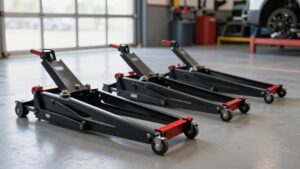
At a race, quick pit-lane repositioning can matter more than the ease of pivoting between lift points in a garage. An aluminum jack typically weighs 30-50% less than a steel model with a similar rated capacity, so you’ll roll it into position faster during a pressured stop.
For scale, the all-aluminum 2-ton Harbor Freight 68051 weighs about 46.5 pounds; some long-reach steel jacks exceed 100 pounds. If you need to lift the jack rather than roll it, a 46-50-pound unit is easier to carry short distances when your time and crew are limited.
Steel remains workable when mobility matters less, but you may need a hand truck or rolling gear to manage its mass and bulk. Aluminum also resists corrosion during transport and exposure to changing weather, helping you keep equipment ready without adding avoidable preparation work before each event or disrupting staging.
Hydraulic Seal Replacement Costs
If a floor jack leaks down or won’t hold pressure, worn ram seals or leaking bypass seals are common causes, and access time often drives the repair bill more than whether the jack is aluminum or steel.
You’ll usually pay for labor to reach the hydraulic subassembly; closely packed components in premium aluminum models can take longer to remove and reseal. Regardless of frame material, seals typically use elastomer and metal backup rings, so model serviceability matters more than the metal.
- Replace the main ram seal; inspect the wiper seal for wear.
- Check bypass seals and identify the leak before ordering parts.
- Refill and bleed fluid after reassembly to restore pressure.
- Compare the quote with purchase price; resealing can consume a substantial share.
Overload-Induced Frame Deformation
Overload-induced frame deformation depends primarily on exceeding a jack’s rated capacity, not on whether its frame is aluminum or steel. Either material can flex when you apply more load than its structure can sustain.
You may notice creaking or straining under heavy load, particularly with half-aluminum, half-steel designs; an all-steel jack may feel more stable, but that doesn’t make it overload-proof. Although aluminum models often weigh 30–50% less at similar ratings, components such as the hydraulic ram, pins, screws, bearing surfaces, and fasteners can still deform or fail above specification.
Choose a rated lifting capacity that suits your vehicle, and don’t exceed it. Deformation at the lifting point can compromise support and cause catastrophic break-through. Stop using it if you see distortion.
Wet-Pit Corrosion Resistance
In a wet pit, you’ll generally get better corrosion resistance from an aluminum jack because its oxide layer helps protect the frame and handle from rust.
Steel jacks need more frequent inspection and cleaning at exposed pins, fasteners, and bearing surfaces. Whichever material you choose, wipe away standing water and check load-bearing contact points for rust.
Aluminum’s Corrosion Resistance
Because aluminum forms a stable oxide layer, an aluminum jack’s frame and handle resist rust and moisture-driven deterioration better than typical steel surfaces in wet-pit conditions.
That layer matters when you use or store your jack where water and grime recur. It slows surface oxidation on exposed structural parts, helping preserve appearance and limit maintenance. It doesn’t make the entire tool corrosion-proof: the hydraulic ram assembly and fasteners still contain steel, so you should keep them clean, dry, and inspected.
- After rain-splashed use, wipe the frame and handle before storage.
- Remove corrosive grime promptly to reduce moisture retention.
- Check joints and lifting contacts for coating damage or early pitting.
- If your jack gets wet often, inspect steel components separately and follow its care instructions.
Steel’s Wet-Pit Protection
Although steel can resist deformation better than lightweight alloys, wet-pit durability depends on ensuring control of corrosion. In a wet pit, inspect contact points such as the saddle, hydraulic ram interfaces, pins, and fasteners, where moisture can harm steel components even on an aluminum jack. Choose a jack with protective coatings, then check the lifting point on a regular basis.
Rust buildup there can weaken the contact area until it breaks through under load. Aluminum frames are often marketed as corrosion-resistant, but they don’t eliminate this maintenance risk; clean the jack and check for rust on moving parts. Use the rated capacity correctly, because overload can add stress to compromised interfaces. Steel’s structural resilience may suit wet pits when you manage corrosion, but material alone can’t ensure safe service.
Weight Capacity by Vehicle Type
Choose a jack rated for your vehicle’s actual weight: passenger cars typically need 2–3 tons, while many trucks and SUVs need 3–6 tons. For heavier vehicles or added restoration mass, select a higher rating to maintain a safety margin.
Capacity, not whether the jack uses aluminum or steel, determines whether it’s suitable.
Match Capacity to Vehicle
Match the jack’s rated capacity to your vehicle’s weight and service needs, not to whether it’s made of aluminum or steel. Check the manufacturer’s rating and confirm it suits the load at the intended lifting points; vehicle curb weight alone doesn’t describe every service condition.
- For many cars and SUVs, a 2–3-ton jack is common; choose capacity for the vehicle and job.
- For heavier trucks, consider 6,000–8,000-pound ratings; the Big Red AT84007R, for example, is rated at 8,000 pounds.
- With low-clearance cars, verify both rated capacity and lift range; one aluminum racing jack reaches about 19.5 inches.
- For trackside or quick maintenance, portability may matter, but the jack must still meet your vehicle class’s requirements.
When unsure, size up; verify pad height and stand placement.
Ratings for Common Vehicles
Jack capacity depends on the vehicle and the lift point, not whether the jack is aluminum or steel.
For a 3,000 to 4,000-pound passenger car, you can often use a 2-ton jack for a one-corner lift. Heavier sedans and SUVs weighing about 4,500 to 6,000 pounds may call for a 3-ton model.
Light trucks and SUVs commonly weigh 6,000 to 8,000 pounds; choose an 8,000-pound-class jack because corner loads can approach or exceed a 6,000-pound rating.
Low-profile performance cars often weigh 2,800 to 3,800 pounds. A 6,000-pound low-profile aluminum racing jack may exceed their capacity needs, but its low starting pad height and roughly 19.5-inch lift range can suit chassis clearance and service access.
Select a capacity tier by vehicle type; carefully check both starting and lift heights for fit.
Leave a Safety Margin
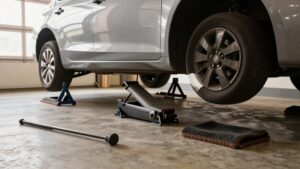
Build in a capacity margin rather than selecting a floor jack that only meets your vehicle’s weight. Aim for a rated capacity with roughly 50% headroom; a 3-ton jack suits cars better than a bare-minimum match. Match capacity to vehicle type and lifting point, and confirm your stands’ height range before working.
- For trucks or SUVs, consider a steel jack; the Big Red AT84007R supports up to 8,000 lb with a heavy-duty frame.
- For low-profile cars, check capacity and clearance: Pittsburgh’s 3-ton aluminum jack lifts to 19.5 inches from a 3.8-inch minimum pad height.
- Don’t use jack weight alone: a 63-pound aluminum unit needs adequate rated capacity for your load.
- Verify your stands’ required heights; insufficient lift range can prompt unstable workarounds, regardless of jack rating.
Compare Purchase Prices
Although prices vary by brand and capacity, steel floor jacks generally cost less than comparable aluminum models, which carry a premium for reduced weight.
Compare prices at the same rated lifting capacity rather than judging by material alone. An all-aluminum Harbor Freight 2-ton jack (68051) weighs about 46.5 lb, illustrating the mobility advantage that often accompanies a higher purchase price.
Some long-reach steel jacks weigh over 100 lb, yet steel options typically cost less than aluminum units with similar capacity. If you prioritize purchase cost and don’t need frequent repositioning, steel usually offers better value for stationary garage use. Choose aluminum when easier lifting and moving the jack matters enough to justify its premium. Compare warranties and included features before you buy each model.
Conclusion
Choose a floor jack by matching its capacity and low-profile reach to your vehicle, not by material alone. Aluminum models reduce carrying weight, while steel jacks typically cost less and tolerate demanding shop use.
Compare saddle range, lift speed, swivel control, and corrosion protection alongside purchase price. If you move equipment often, aluminum may justify its premium; if your jack’s fixed in one bay, steel can offer better value. Verify the rated capacity before lifting.