
Floor Jack and Garage Lifting Equipment Guides
GarageHow helps home mechanics choose and fix floor jacks, jack stands, ramps, hoists and garage lifts. We compare gear on rated load, lift range, stability and build quality, then explain step by step how to set it up safely and solve common problems.
GarageHow helps home mechanics choose, use and troubleshoot the gear that gets heavy things off the ground safely. Every guide starts with the questions a technician asks before going under a vehicle: rated load, lift range, surface and what fails first. Coverage spans floor jacks, bottle jacks, jack stands, car ramps, engine hoists, home garage lifts, motorcycle and mower lifts, jack pads, creepers and farm jacks.
Free Tools & Calculators
Work it out in seconds: free, right in your browser, no sign-up. Tap “Use it here” to use a tool without leaving this page.
Bottle Jack Reach & Capacity Selector
Checks a bottle jack's ton rating, closed height and reach (stroke + extension screw) against your vehicle's lift-point load and height.
Car Ramp Angle & Length Calculator
Find a car ramp's angle, percent slope and length from its rise, and the ramp length needed to stay within a low car's approach angle.
Engine Hoist Boom Capacity Checker
Compare engine weight with your hoist's data-plate rating at each boom position: utilization, margin and the longest position within rating.
Flat Tire Scissor Jack Height Checker
Enter your flat-tire clearance, lift and vehicle weight to see if a scissor jack fits under, reaches high enough and is rated for the load.
Home Garage Lift Clearance Checker
Check if a car lift, ramp or jack fits under your garage ceiling: usable rise, headroom and pass/fail from your own measurements.
Jack Point Pad and Adapter Picker with Height Stack
Check jack pad adapter fit: pick a pad type for your jacking point and see if the jack + pad height stack still fits under the car.
Latest Contents

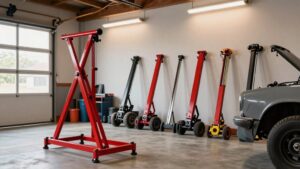
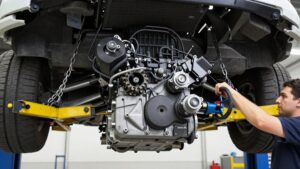
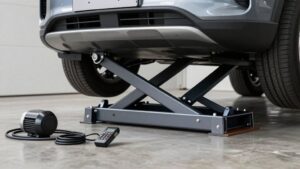
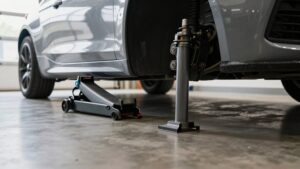
What Is GarageHow?
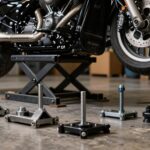
Motorcycle, ATV & Mower Lifts
Scissor tables, stands and ramps for bikes, quads and lawn tractors, with notes on tie-down points, deck stability and the setup mistakes that let small machines tip during routine service.
A good jack gets the car up, but a good set of stands keeps you safe.
How GarageHow Chooses Gear
- Rated load and range: We check rated capacity against real vehicle weights and whether the lift range suits low cars and tall trucks.
- Stability and footing: Base width, locking design and behavior on sloped or rough concrete are weighed before anything earns a recommendation.
- Build and wear points: Welds, seals, pins, casters and release valves are inspected for the parts that fail first under daily garage use.
- Setup and troubleshooting: Each pick comes with clear setup steps and fixes for leaks, slow lifting, sticking and other common problems.
Frequently Asked Questions
What size floor jack do I need for my vehicle?
Choose a jack rated for at least three quarters of your vehicle’s total weight, since you lift one end at a time. Then check the minimum saddle height against your bumper clearance and the maximum lift against your frame height. Trucks and SUVs generally need a higher range.
Can I work under a car supported only by a jack?
No. A jack is meant for lifting, not for holding a vehicle while you work underneath. Always lower the weight onto correctly rated jack stands placed at the manufacturer’s lift points, on firm level ground, and give the vehicle a gentle shake test before getting under it.
Are car ramps or jack stands better for home repairs?
It depends on the job. Ramps are quick and stable for oil changes and inspections where the wheels stay on. Jack stands are needed when you remove wheels or work on suspension and brakes. Many home garages keep both and choose based on the task.
Why does my floor jack lift slowly or sink under load?
Slow lifting or sinking usually points to low or aerated hydraulic fluid, or a worn seal. Check the fluid level, bleed trapped air by opening the release valve and pumping the handle, and inspect for leaks. If the jack still drops under load, it may need replacement.
What should I check on garage lifting gear before each use?
Look over the rating label, welds, locking pins, ratchet teeth, casters and any fluid leaks, and make sure the surface is flat and solid. Retire any gear with cracks, bends or damaged parts. A quick check takes a minute and may prevent a serious accident.
Most Viewed
- 111 Best 3 Ton Steel Floor Jacks for 2026
- 2Electric Car Jack vs Floor Jack: Roadside Convenience or Garage Power?
- 3Are Aluminum Floor Jacks Safe? Strength, Ratings and Weak Spots
- 4Low-Profile Jack vs Regular Floor Jack: Which Fits Under Your Car?
- 5What Size Floor Jack Do You Need? Tonnage by Car, SUV and Truck










- 1Do You Need Ramps to Change Your Oil? Ramps vs Jack vs No Lift
- 2Are Car Ramps Safe to Work Under? Weight Ratings and Common Mistakes
- 3How to Use Car Ramps Safely: Alignment, Chocks and Parking Brake
- 4Car Ramps vs Jack Stands: Speed, Safety and Clearance Compared
- 5How to Get a Low Car on Ramps Without Scraping the Bumper


Most Asked
- 1Electric Car Jack vs Floor Jack: Roadside Convenience or Garage Power?Floor Jacks
- 2Are Aluminum Floor Jacks Safe? Strength, Ratings and Weak SpotsFloor Jacks
- 3How to Use an Engine Load Leveler to Tilt and Clear the BayEngine Hoists
- 4Low-Profile Jack vs Regular Floor Jack: Which Fits Under Your Car?Floor Jacks
- 5What Size Floor Jack Do You Need? Tonnage by Car, SUV and TruckFloor Jacks
- 6Do You Need Ramps to Change Your Oil? Ramps vs Jack vs No LiftCar Ramps
- 7How to Use an Engine Hoist to Pull an Engine SafelyEngine Hoists
- 8How to Choose a Mechanic Creeper: Casters, Clearance and ComfortMechanic Creepers