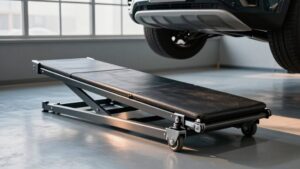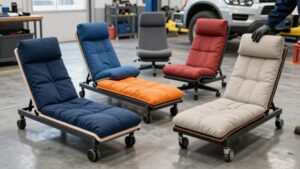
How to Choose a Mechanic Creeper: Casters, Clearance and Comfort
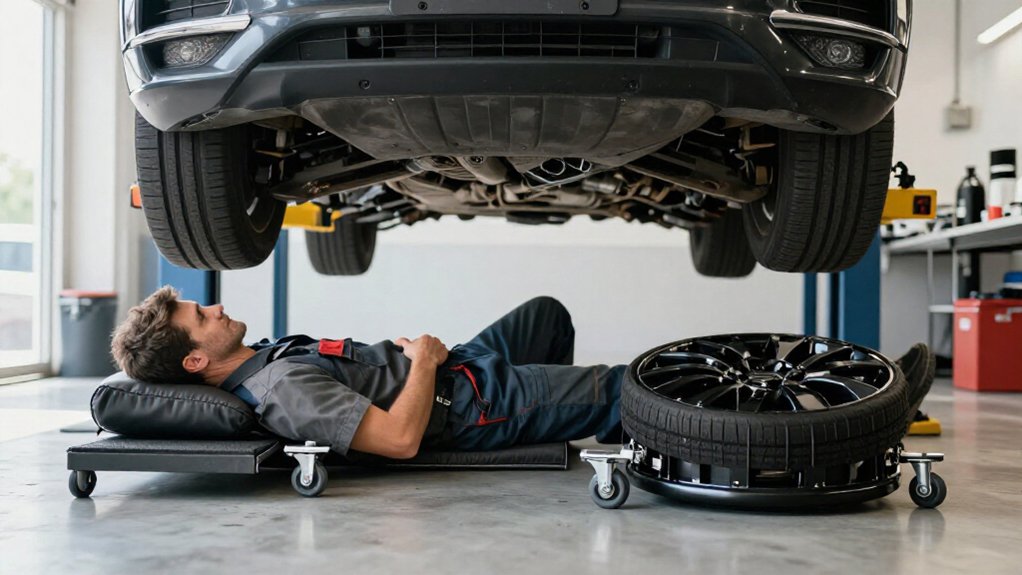
Choose a mechanic creeper by matching its wheels, clearance, and cushioning to your garage and typical jobs.
Polyurethane or rubber casters roll smoothly on textured or oily floors; larger wheels handle debris, while smaller wheels fit beneath low-clearance vehicles.
For sessions over 30 minutes, deeper padding and an adjustable headrest can reduce pressure and fatigue.
Add your body weight and carried tools, then choose a rating with reserve capacity.
Frame materials, storage, and caster construction can further narrow your options.
Work Surface Conditions
The floor beneath your creeper affects how smoothly and safely it rolls. On rough or textured flooring, such as textured vinyl, polyurethane or rubber casters provide smoother movement and resist oil, grease, and other shop chemicals. Check the caster material against the fluids and debris in your work area.
If loose nuts, bolts, or air hoses cross your path, choose larger, well-spaced swivel casters. Their added clearance helps the creeper roll over obstacles with less risk of snagging or tipping. In tight garages, 360-degree swivels make frequent turns easier and help you steer around cords and clutter.
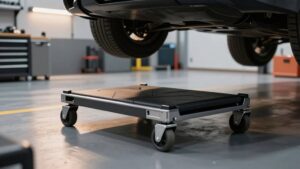
Also consider the surface height you need beneath a vehicle. Low-profile creepers preserve clearance, but smaller wheels may catch on cracks or debris. On hard floors, deeper cushioning, such as the Omega Z-Creeper’s 2.0-inch cushion, can improve comfort.
Typical Session Length
Time under the car determines how much padding and support you’ll need.
If you expect to work beneath a vehicle for 30+ minutes, prioritize deeper cushioning to limit pressure points. Omega’s Z-Creeper has about 2.0-inch padding; Vyper scores around 2.8/3 for comfort.
Low-profile designs may score near 1.8/3.
Head and neck support also matter during extended work; Vyper’s adjustable headrest helps reduce fatigue. If your workflow alternates under-car tasks with sitting breaks, consider a foldable Z-style design that converts to a seat. Pro-Lift provides a stool mode, and Omega offers chair or stool positions.
Plan ahead: some premium foldable creepers may take 20–30 minutes and require multiple people to assemble. Assemble yours before your session, so you won’t lose time once the job begins.
Caster Material and Bearing Quality
Once you’ve matched the padding to your typical session length, check how the creeper rolls. Choose polyurethane or rubber casters; they generally roll smoothly across oily floors and resist shop chemicals longer than inexpensive plastic. Prefer 360-degree swivel casters to steer around hoses and loose hardware without repositioning the creeper.
| Feature | Practical effect |
|---|---|
| Wheel material | Smooth rolling; better chemical resistance |
| Bearing quality | Less drag and jarring motion |
Wheel size depends on access: smaller wheels can fit tight under-car spaces, while larger wheels cross small cracks and debris more easily. Smooth bearings reduce pushing effort, especially when you’re carrying tools, and help limit jolts that undermine comfort. Check for covers that keep hair and clothing from tangling; for example, Vyper covers each swivel caster. Clean and inspect wheels regularly, since clogged or damaged casters can accelerate bearing wear and compromise predictable movement.
Creeper Frame Materials
When you compare frames, weigh steel’s impact strength against aluminum’s lower weight and easier repositioning. Plastic resists oil, grease, and solvents, while a reinforced design should stay rigid under your load without flexing or wobbling.
Check the padding and upholstery too: they affect comfort, wear resistance, and cleanup.
Steel Frame Strength
Although a steel frame can handle heavy loads, its strength depends on rigid construction, corrosion protection, and secure joints. When you compare models, check stated capacity; premium steel-based creepers may support up to 400 pounds, while Z-creepers can reach about 450. Choose a rating that covers your body weight plus tools, and don’t treat capacity alone as proof of rigidity.
Inspect the frame for bracing and minimal flex under load. A rust-resistant finish matters in garages, where oil and grease can damage coatings; if corrosion exposes steel, weakening may follow.
Check welds, fasteners, and reinforced joints, especially on folding Z-style models. Repeated folding and unfolding can loosen poorly secured connections. A stable caster layout also supports safe movement. Check it under load before use.
Aluminum Weight Savings
Steel provides rigidity, but an aluminum frame can reduce a creeper’s weight and make it easier to reposition or store, especially if you move between bays or handle short jobs.
Check the material list rather than relying on color or a “lightweight” label. The Vyper Lay-Down 46 lists vinyl, steel, and aluminum, combining weight reduction with a durability-focused build. Before buying, review its frame reinforcement, fasteners, and load limit; aluminum doesn’t tell you how the structure performs.
Vyper’s 400-pound rating offers a capacity reference, but assess caster performance and stability under your expected load. Lighter weight can simplify maneuvering during sessions, yet you’ll still want cushioning; its comfort score reached about 2.8 out of 3.0 in testing. Compare these details to your work routine.
Plastic Durability
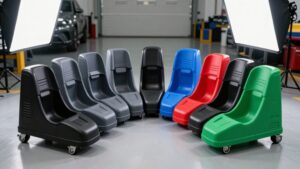
Plastic creeper frames, often made from high-density polyethylene, resist corrosion and many fuels, solvents, and greases common in garages.
A plastic frame also weighs less than metal, which can reduce fatigue and limit wobble under your load. But don’t assume every plastic model handles abuse equally: thicker, quality construction generally feels sturdier and stands up better to impacts from dropped tools.
If you routinely drop heavy equipment onto your creeper, plastic may flex more than a rigid metal frame.
Check the frame’s construction and rated capacity before buying. Look for reinforced plastic and inspect its thickness and feel where accessible. Some plastic designs omit hardware trays or other reinforced add-ons, so carrying tools can leave protection against impact. Choose a model rated for your typical load.
Padding and Upholstery Materials
Frame material affects durability, but padding and upholstery determine how comfortably you can work beneath a vehicle. For undercar work, choose thick, high-density cushioning to distribute pressure across your back and shoulders. The Omega Z-Creeper’s 2.0-inch cushion earned 2.5/3 for comfort; the Pro-Lift Z-Creeper’s 0.50-inch cushion scored 2.4/3.
Low-profile designs may sacrifice support for clearance: Performance Tool’s W85005 scored 1.8/3, so check padding depth and body fit before buying.
Choose oil- and grease-resistant upholstery you can wipe clean; vinyl or plastic sheds fluids instead of absorbing grime. Heavy-duty plastic can balance comfort, easy handling and corrosion resistance: Bestool’s thick plastic creeper scored 2.5/3. Metal frames offer rigidity under load; plastic weighs less and resists solvents.
Choose for your shop and support needs during repairs.
Best Choice by Weight Limit
Compare each creeper’s rated capacity with your body weight, then account for tools and parts you’ll carry beneath the vehicle. The Omega and Pro-Lift Z-Creepers support up to 450 lb, while the Vyper Lay-Down 46 supports 400 lb and the Lisle 97102 and JEGS 2-in-1 cap at 300 lb.
Choose a model with a safety margin above your total working load, not one that merely meets it.
Compare Weight Ratings
Before choosing a creeper, check its stated maximum capacity against your combined body weight and tools; exceeding that limit can damage the frame or make it roll unsafely. Treat the rating as a load ceiling, not a target, and include anything you’ll carry beneath the vehicle. The Pro-Lift Z-Creeper and Omega Z-Creeper both sit in the 450-pound class, giving you more reserve for gear and long sessions when stable rolling matters.
The Vyper Lay-Down Creeper supports 400 pounds and adds a durable, comfort-focused option. For lighter-duty garage work, the Lisle 97102 plastic creeper and JEGS 2-in-1 folding creeper each cap capacity at 300 pounds. Check the full-load rating and choose higher-rated models when carried gear or extended work makes rolling stability a priority.
Match Your Body Weight
Choose a creeper rated above your combined body weight and the tools or parts you’ll carry; most standard models support about 250–300 lb, so heavier users should look for more capacity.
If you need headroom, the Pro-Lift Z-Creeper holds up to 450 lb and folds into a stool, combining high capacity with a change of position. The Omega Z-Creeper supports 450 lb; its 40-inch length and 2.0-inch cushion suit sustained work.
For moderate loads, the Lisle 97102 carries up to 300 lb and measures 38 × 18 × 5 inches, but it offers less capacity margin. Don’t choose a 300 lb JEGS 2-in-1 if your body weight approaches its limit. Check the rating, then select a model whose limit stays comfortably above your expected load.
Account for Added Gear
Add your body weight to the tools, parts, or batteries you’ll carry on the creeper, then select a model rated comfortably above that total. Include wrenches in your pockets and anything resting on your lap; these loads count while you work.
For heavier combined loads, look for a 450-pound rating, such as the Pro-Lift Z-Creeper or Omega Z-Creeper. A 300-pound model, including the Lisle 97102 or JEGS 2-in-1, may suit moderate loads, but account for carried gear.
If you’re larger or often shift position in seat mode, favor higher capacity: a convertible creeper can concentrate your weight differently than it does when flat. Also consider cushioning; Pro-Lift’s 0.50-inch pad may feel harsh during long sessions when you’re near its rated capacity during long repairs.
Check Safety Margins
Because the rated capacity is a maximum safe load, add your body weight and anything you’ll carry under the car, then choose a creeper rated comfortably above that total. Many creepers carry ratings of 250–300 lb, while models reach 400–450 lb.
Compare the label with your combined load, not body weight; include tools, parts, and supplies. Don’t operate at the limit: bumps and floor obstacles can increase wobble and stress. If your load approaches 300 lb, choose a higher-rated model instead of a plastic creeper with little reserve.
Lisle 97102 is rated 300 lb; Vyper Lay-Down, 400 lb; Pro-Lift and Omega Z-Creepers, 450 lb. Verify the rating before buying. On foldable or Z-conversion designs, preserve capacity during seat-to-lay-down passages, when joints and locking points bear stress.
Vehicle Access and Storage
Match the creeper to both your vehicle’s clearance and your garage space: a low-profile model such as the Performance Tool W85005 slides under cars with limited clearance, while its 2.3-inch wheels may maneuver differently from the Omega Z-Creeper’s 3.0-inch wheels.
For frequent repositioning and compact storage, the 40-inch Omega converts to an upright chair or stool, letting you move between under-car and seated tasks without leaving a long board across the floor. In a tight garage, the 36-inch Pro-Lift Z-Creeper also works as a dual-purpose stool and stores more easily than a fixed or nonfolding design.
Compare footprints before buying: the Vyper Lay-Down measures 46 by 20 by 6 inches, whereas the Lisle 97102 measures 38 by 18 by 5 inches. A larger low-slung creeper can occupy substantial floor area when parked, so measure your storage bay as well as the path beneath the vehicle.
Keep the folded unit clear of walkways and drawers, and verify vertical clearance if you plan to store it upright safely.
Warranty Coverage
After checking clearance and storage, compare warranty terms for coverage of defects and replacement parts, especially for casters, frame joints, and folding locks.
Check whether the stated period covers assembly and manufacturing defects that affect stability or comfort; a named duration is more useful than vague assurances. Ask whether the maker supplies casters, pins, locks, and frame parts, or requires full replacement. For a folding creeper, confirm seat-conversion hardware falls within coverage.
If you’re considering a premium model, check that its cushion and lay-flat components are included. Review exclusions, registration deadlines, and original-owner restrictions before purchase. If you’ll use a foldable or plastic creeper on oily, greasy, or textured floors, make sure conditions won’t void protection. Keep proof of purchase and follow the procedure.
Caster Mount Weaknesses
Caster mounts take repeated shock loads as a creeper rolls over textured flooring, air hoses, and loose hardware, which can loosen fasteners or stress the frame.
- Inspect each caster plate for movement, cracked welds, and elongated bolt holes; retighten hardware after assembly and keep wheels aligned.
- Choose larger, robust swivel wheels when your floor has hoses or debris; they roll over obstacles with less jolting and reduce mount abuse.
- Small 2.3-inch wheels can improve clearance, but cracks and loose nuts hit harder, increasing stress at each mounting point.
- Cushioning matters: less bouncing as you reposition can limit repeated loading beneath the car.
If setup takes two people and 20–30 minutes, follow the sequence carefully; poor alignment or loose fasteners can undermine an otherwise sturdy frame.
Integrated Tool Tray Features
When you’re working beneath a vehicle, an integrated or removable tool tray keeps wrenches and small parts within reach and cuts down on leaning and reaching. A tray can keep your workflow organized, but check these details before you choose:
- Choose models such as Vyper or Bestool if you want wrench and parts storage close at hand.
- Check whether the tray is removable and stays accessible as you roll over textured floors or hoses.
- On a folding Z or lay-down creeper, confirm repositioning the seat or cushion won’t block tool access.
- If a model lacks a tray, plan where you’ll place tools; Pro-Lift plastic and Lisle 97102 options may leave them on the floor.
Tray-equipped picks often score 2.5–2.8/3 for comfort.
Conclusion
Choose a mechanic creeper by matching its casters, frame, and clearance to your floor, vehicle, and body weight. For frequent or extended repairs, prioritize supportive padding, smooth-rolling bearings, and a frame with a clearly rated capacity. Check caster mounts for reinforcement, confirm the creeper fits beneath your vehicle, and consider storage space and useful tool trays.
Review the warranty before buying. These checks help you select a stable, comfortable creeper that suits your work, not just one that looks sturdy.