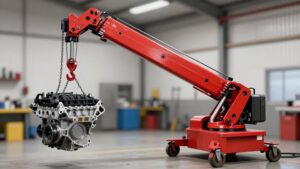
6 Best 4 Ton Engine Hoists for 2026
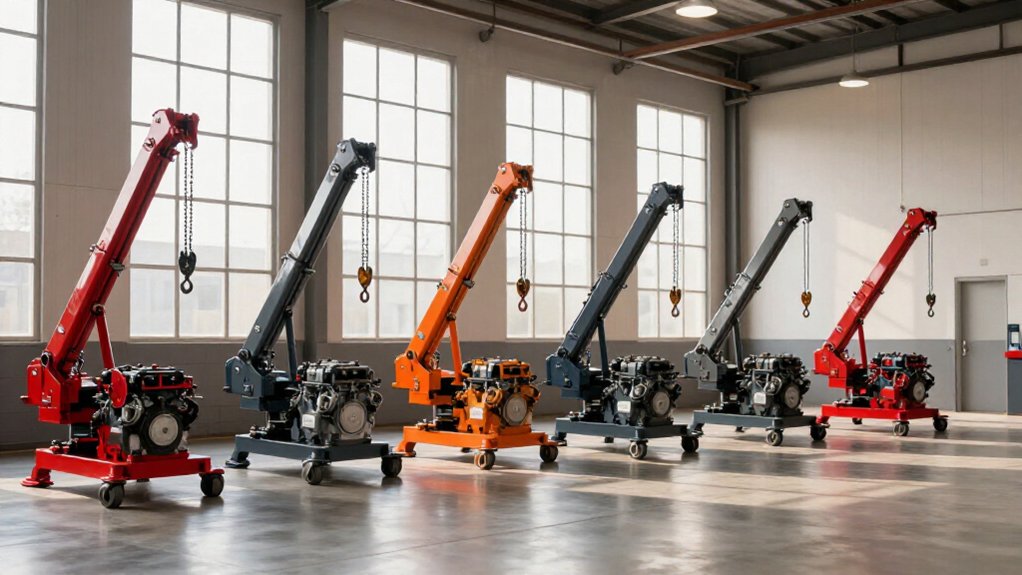
The best 4-ton engine hoists for 2026 pair dependable lifting equipment with compatible slings and balancing accessories. Consider the VEVOR 4-ton long ram jack for 24–43.7-inch height adjustment, the AFF 3-ton cherry picker for selectable boom capacities, and the listed VEVOR chain slings for rated lifting support.
Add an engine stand or load leveler when you need secure positioning. Always check the hoist’s capacity at your chosen boom position and account for every accessory; the guide below explains what to compare.
| VEVOR 4-Ton Hydraulic Long Ram Jack with Handle |  | Best Long-Reach Ram | Lifting Capacity: 4 tons (8,818 lb) | Product Type: Hydraulic long ram jack | Material: Steel structure and hydraulic cylinder | VIEW LATEST PRICE | Read Our Analysis |
| VEVOR 3-Ton G80 Engine Lifting Chain Sling with Hooks |  | Best Engine Sling | Lifting Capacity: 3 tons (6,600 lb) | Product Type: Four-leg chain sling | Material: G80 manganese-steel chain and alloy-steel hooks | VIEW LATEST PRICE | Read Our Analysis |
| AFF 3 Ton Cherry Picker Engine Hoist – Hydraulic Engine Crane – Heavy Duty |  | Best Overall Hoist | Lifting Capacity: 3 tons, adjustable to 2, 1.5, or 1 ton | Product Type: Hydraulic engine crane | Material: High-grade steel | VIEW LATEST PRICE | Read Our Analysis |
| VEVOR 750 lb Rotating Engine Stand with 4 Casters |  | Best Engine Stand | Lifting Capacity: 750 lb | Product Type: Rotating engine stand | Material: Alloy-steel structure and cast-iron body | VIEW LATEST PRICE | Read Our Analysis |
| VEVOR 5-Ton 4-Leg Engine Lifting Chain Sling 10 ft |  | Best Heavy-Duty Sling | Lifting Capacity: 5 tons (11,000 lb) | Product Type: Four-leg chain sling | Material: G80 manganese-steel chain and alloy-steel hooks | VIEW LATEST PRICE | Read Our Analysis |
| Big RED 1500LBS Engine Load Leveler Engine Hoist Shop Crane Accessory |  | Best Load Leveler | Lifting Capacity: 3/4 ton (1,500 lb) | Product Type: Engine load leveler | Material: Structural steel | VIEW LATEST PRICE | Read Our Analysis |
More Details on Our Top Picks
VEVOR 4-Ton Hydraulic Long Ram Jack with Handle
For extended lifting reach, the VEVOR 4-ton long ram suits engine hoists and garage lifts that need extra height. You can adjust its height from 24 to 43.7 inches and use its 19.7-inch stroke to match varied lifting points. It supports loads up to 8,818 pounds and uses a slow-release feature to help you lower equipment securely.
A flat base and stable steel construction support dependable operation, while the large-diameter hydraulic cylinder and Y-type polyurethane seals resist wear and oil leakage. The sliding pressure pump makes one-person use easier, and the rubber anti-slip handle helps reduce hand fatigue during work.
- Lifting Capacity:4 tons (8,818 lb)
- Product Type:Hydraulic long ram jack
- Material:Steel structure and hydraulic cylinder
- Adjustability:Adjustable lifting height, 24–43.7 in
- Intended Use:Hydraulic lifts, engine hoists, and garage applications
- Color:Red
- Additional Feature:19.7-inch extended stroke
- Additional Feature:Slow-release lifting feature
- Additional Feature:Sliding pressure pump
VEVOR 3-Ton G80 Engine Lifting Chain Sling with Hooks
The VEVOR G80 chain sling suits engine hoists for lifting centered loads with four adjustable legs and grab hooks. You get a 5-foot, 1/4-inch G80 manganese-steel chain rated to 6,600 pounds, with alloy-steel hooks and four adjusters. These let you match leg lengths for a steadier lift when handling engines, transmissions, or other equipment.
Full-automatic welding supports long-term use. Before hoisting, ensure the load hangs centered on the hook; never catch a hook’s edge. Keep the sling untwisted, upright, and untangled, and confirm your hoist and rigging can safely handle the load. Though useful for many jobs, it.
- Lifting Capacity:3 tons (6,600 lb)
- Product Type:Four-leg chain sling
- Material:G80 manganese-steel chain and alloy-steel hooks
- Adjustability:Four chain adjusters
- Intended Use:Lifting engines, beams, logs, and other heavy objects
- Color:Red and black
- Additional Feature:Four-leg grab hooks
- Additional Feature:Four included adjusters
- Additional Feature:Full-automatic welding
AFF 3 Ton Cherry Picker Engine Hoist – Hydraulic Engine Crane – Heavy Duty
Built for busy repair shops, AFF’s 3-ton crane is a standout all-around choice for lifting engines and other heavy components. Its four-position telescopic boom lets you select 3-, 2-, 1.5-, or 1-ton capacity, while a 360-degree hook helps you position chains. Reinforced legs, welded high-grade steel, a 12-ton hydraulic ram, and a safety bypass support dependable operation.
Large 4.25-inch rear swivel casters and 6-inch front wheels help you move and position the crane. The boom’s hook height ranges from 70 to 82 inches. At 359 pounds, you’ll find this heavy-duty model useful for versatile lifting and controlled daily transport.
- Lifting Capacity:3 tons, adjustable to 2, 1.5, or 1 ton
- Product Type:Hydraulic engine crane
- Material:High-grade steel
- Adjustability:Four-position telescopic boom
- Intended Use:Raising and moving engines, differentials, and transmissions
- Color:Red
- Additional Feature:Four-position telescopic boom
- Additional Feature:360° positioning hook
- Additional Feature:Safety bypass mechanism
VEVOR 750 lb Rotating Engine Stand with 4 Casters
A dependable engine-stand choice for rebuilders, VEVOR’s 750 lb model supports engines on a stable H-shaped base. You’ll get less shaking and tilting than with a traditional T-shaped design, while alloy steel and a cast-iron body provide durable support.
Four adjustable arms fit various engine blocks, and their 360-degree rotation helps you position the engine for repair. A long handle and six locking holes let you turn and secure the assembly.
Four casters, two fixed and two swivel, including one with a brake, make it easier to move the stand around your workspace. Check the 750-pound limit before mounting your engine.
- Lifting Capacity:750 lb
- Product Type:Rotating engine stand
- Material:Alloy-steel structure and cast-iron body
- Adjustability:Adjustable mounting arms
- Intended Use:Supporting engines during maintenance
- Color:Orange
- Additional Feature:H-shaped base
- Additional Feature:Six rotation-fixing holes
- Additional Feature:One caster with brake
VEVOR 5-Ton 4-Leg Engine Lifting Chain Sling 10 ft
For demanding engine lifts, VEVOR’s heavy-duty four-leg sling gives 4-ton hoist users an 11,000-pound working capacity and adjustable reach. Its 10-foot G80 manganese-steel chains measure 5/16 inch thick, while alloy-steel hooks and automatic welding support long-term use.
Four grab hooks and four adjusters let you tailor chain lengths to help stabilize irregular loads. Use this sling for engines, transmissions, trucks, tractor tires, steel beams, logs, and other lifting tasks. Before hoisting, center the load on the hook, keep the hook edge clear, and ensure the chains aren’t twisted, inverted, or tangled. Check load limits before every lift.
- Lifting Capacity:5 tons (11,000 lb)
- Product Type:Four-leg chain sling
- Material:G80 manganese-steel chain and alloy-steel hooks
- Adjustability:Four chain adjusters
- Intended Use:Lifting engines, beams, logs, and other heavy objects
- Color:Black and red
- Additional Feature:10-foot chain length
- Additional Feature:Four included adjusters
- Additional Feature:Full-automatic welding
Big RED 1500LBS Engine Load Leveler Engine Hoist Shop Crane Accessory
Garage and workshop mechanics will appreciate the BIG RED T32100, a standout load leveler for balancing engines during hoist lifts. Its 1,500-pound capacity suits many engine-handling tasks in your garage, workshop, or agricultural setting. Rugged structural steel provides a sturdy build, while three chain-mount positions help you adapt the setup to different engine configurations.
Four 14-inch chains, each with an L-bracket assembly, attach to the engine. Turn the crank handle to adjust the threaded shaft and balance the load as you lift. You’ll need a compatible engine hoist or shop crane; this accessory helps manage balance, but doesn’t increase your hoist’s capacity.
- Lifting Capacity:3/4 ton (1,500 lb)
- Product Type:Engine load leveler
- Material:Structural steel
- Adjustability:Adjustable leveler with three chain-mount positions
- Intended Use:Balancing engines with a hoist or shop crane
- Color:Red
- Additional Feature:Three chain-mount positions
- Additional Feature:Threaded balancing shaft
- Additional Feature:Four L-bracket chains
Factors to Consider When Choosing 4-Ton Engine Hoists
When selecting a 4-ton engine hoist, ensure its load capacity and lifting range align with your jobs. Review its stability, safety features, construction, and durability to enable dependable use.
Also think about mobility and adjustability to make sure you can position the hoist where you need it.
Load Capacity
Choose a 4-ton engine hoist whose capacity comfortably exceeds the heaviest load you plan to lift; this class is rated for about 8,818 pounds.
A rating gives you a ceiling, not a reason to approach the limit casually. Check that the stated capacity applies to the hoist’s hydraulic ram and lifting system, rather than only to a hook, boom point, or accessory.
If you’re lifting an engine with attachments or combined components, add their weights and keep the total within the rated limit.
Match each chain sling, lift leveler, and accessory to that load; each needs an equal or higher working capacity so a weaker link won’t restrict the lift. Consider how the hoist stays stable under pressure when handling heavier engines.
Lifting Range
Check a 4-ton engine hoist’s lifting range from its lowest hook position to its maximum height to guarantee it can reach your engine with enough clearance. Measure the vertical distance from the hoist’s position to the engine’s lifting point, then add any slack you’ll need. Confirm the adjustable range covers that total; a range such as 24 to 43.7 inches may suit engine placements and reduce repositioning.
Also check the extended stroke, which determines how far the load rises between adjustments. Review the hook-height settings, too. Positions such as 70, 74.5, 80, and 82 inches let you choose workable elevations. Compare these measurements with your vehicle’s clearance, so the hook can reach the lifting point and raise the engine to the height your task requires.
Stability and Safety
After confirming the hoist can reach the engine, assess how securely it’ll support and control the load. Choose a model with a wide, flat base that resists tilting or shaking, and check that its wheels or casters stay controlled so the hoist won’t shift as you lift. Confirm its working capacity exceeds the engine’s expected weight; a four-ton rating gives room for uneven or dynamic loads, but never exceed the stated limit.
For safe control, choose slow-release or bypass controls to prevent sudden drops while lowering. Center the load on the hook; don’t let its edge engage improperly. Keep chain slings untwisted, correctly oriented, and untangled. Set the hoist on stable ground, and confirm the load hangs balanced before lifting or lowering engine.
Construction and Durability
Because a 4-ton engine hoist must withstand repeated heavy lifts, look for reinforced leg assemblies and welded structural steel that resist flexing and fatigue. Inspect the frame for thick-walled members and sound welds; these help preserve strength through demanding lifting cycles.
If your hoist uses hydraulics, check for a large-diameter steel cylinder, durable Y-type polyurethane seals, and a slow-release mechanism. Together, these features can limit leaks and support controlled lowering over time.
Choose steel parts with corrosion-resistant finishes, such as lead-free paint or protective electrostatic coatings, to guard against oil and grease. You’ll also want pressure-resistant cast or steel components, plus durable chains, hooks, and pivots.
Look for full-automatic welded hardware that resists wear and keeps attachment points aligned through repeated use and loads.
Mobility and Adjustability
For smooth positioning, choose a 4-ton engine hoist with swivel casters and fixed front wheels to help you move heavy loads during setup and reattachment.
Check its adjustable boom so you can match engine height. Multiple hook-height settings, such as 70, 74.5, 80, and 82 inches, give you options. Adjustable legs let you tailor the footprint: retract them to 23 inches or extend them to 28.5 inches when you need a wider stance.
Choose a rotating, 360-degree hook to align lifting chains at changing angles without repositioning the hoist. Inspect caster size and wheel geometry; 4.25-inch rear swivel casters and a stable base support controlled movement and help reduce shifts while lifting. Match these adjustments to your workspace and load, and you’ll position the hoist confidently.
Frequently Asked Questions
How Often Should an Engine Hoist Be Inspected for Damage or Wear?
You’ll inspect your engine hoist before every use, checking for cracks, leaks, bent parts, and worn chains.
Schedule thorough inspections as your manufacturer recommends, and inspect immediately after any overload, impact, or unusual operation.
Can an Engine Hoist Be Used on Uneven or Sloped Surfaces?
No, you shouldn’t use an engine hoist on uneven or sloped surfaces. You risk tipping, load shifts, and serious injury. Move it onto firm, level ground, lock the wheels, and follow the manufacturer’s instructions carefully.
What Precautions Should I Take Before Lifting an Engine?
Before lifting, inspect your hoist, chains, and engine mounts for damage; confirm rated capacity exceeds load. Park on firm, level ground, secure the vehicle, balance the engine, and keep everyone clear as you lift.
How Should an Engine Hoist Be Stored When Not in Use?
Store your hoist on a level, dry surface; lower the boom, retract the hydraulic ram, and release pressure. Fold it only if designed to fold, then secure it safely.
Do Engine Hoists Require Periodic Hydraulic Fluid Replacement?
Usually, you don’t need to replace hydraulic fluid on a fixed schedule; check your hoist’s manual.
Inspect for leaks, contamination, or sluggish lifting, and change fluid when the manufacturer recommends it or service indicates otherwise.
Conclusion
Choosing the right equipment starts with matching each tool to your engine’s weight and lifting plan. A 4-ton rating doesn’t mean every listed product can lift four tons; check capacities, compatibility, and manufacturer instructions before you buy or use anything.
Pair a suitable crane with a rated chain, dependable ram, and load leveler when needed. You’ll work more safely, avoid costly mistakes, and choose equipment that fits your shop and the jobs you’re tackling today.