Can a Bottle Jack Be Used Horizontally? Which Types Actually Can
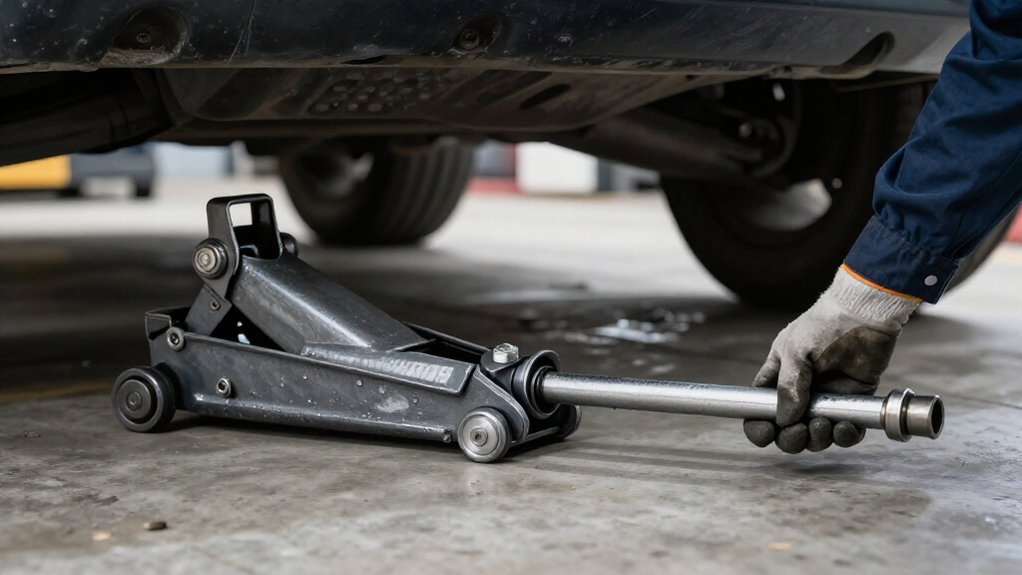
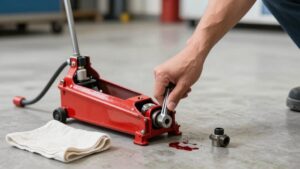
You can use a bottle jack horizontally only when its manufacturer explicitly approves that orientation; standard vertical-only models can ingest air, leak, or lose pressure.
Choose a multidirectional jack designed with seals and an oil reservoir that keep the pump pickup submerged when laid on its side.
Check the manual for permitted angle, side-load limits, and handle clearance.
For trailer-tongue work, use rated stands and solid ground.
The next sections explain setup and failure risks.
Reservoir Orientation Requirements
Before laying a bottle jack on its side, check the manufacturer’s instructions: only models designed for horizontal use can operate safely that way. Next, confirm the manual’s specified reservoir orientation. The oil must stay at the pump’s pickup point, covering the working components.
If you position the jack so fluid drains away from that pickup, the pump can ingest air, causing uneven lifting, slow leaks, or pressure loss. A jack may fail to lift consistently even when the load remains below its rated capacity. Keep the reservoir within its safe oil-level range and follow the instructions.
Before applying force, make sure the saddle sits flush against the metal lift point and that the jack maintains the prescribed reservoir orientation. Don’t assume every bottle jack can work sideways.
Pump Handle Clearance
With the reservoir orientation set, check whether the pump handle has room to move through its full stroke. Horizontal placement changes the jack’s height and operating angles, so the handle may hit the vehicle frame, bumper, or floor sooner than it would in vertical use. Before positioning the jack, measure the available space and map the handle’s planned swing arc.
Set the jack at its required saddle contact point, with its base fully seated. Then confirm you can pump through the entire stroke without binding or contacting nearby panels. If the jack shifts, your clearance assessment no longer applies; stop and reassess its position. Don’t force a handle past an obstruction. Reposition the jack if needed. A multi-directional design, such as YELLOW JACKET’s, offers flexibility, but safe horizontal use depends on unobstructed handle movement.
Straightening a Bent Trailer Tongue
If you’re straightening a bent trailer tongue, use a bottle jack horizontally only if its manual permits side-loading in that orientation. Confirm the jack’s rating and allowable setup; a 20-ton model’s maximum isn’t a working target. Seat the saddle firmly against a reinforced tongue section, away from plastic, to keep force even.
| Setup | Requirement |
|---|---|
| Ground | Level, stable; use ≥1/2-inch steel plate |
| Gravel | Add plywood beneath steel |
| Support | Use rated stands before adjusting |
| Access | Never trust jack alone nearby |
Expect stubborn, concentrated bending resistance; choose adequate capacity margin rather than judging load by feel. Apply force gradually and monitor alignment under controlled load. If the jack shifts, loses firm contact, or the tongue moves unpredictably, stop, unload safely, and reset the setup before continuing.
Plunger Seal Configurations
When you orient a bottle jack horizontally, the plunger seal must retain oil despite the changed reservoir position. A seal designed only for vertical use may unseat or leak, reducing lift stability.
Check your jack’s manual or label for explicit horizontal-use approval before operating it.
Seal Orientation
A bottle jack works horizontally only if its plunger seals and oil-management system maintain proper lubrication and sealing pressure in that orientation. Look for a jack rated for horizontal or multidirectional operation; its seals keep pressure when the plunger axis isn’t vertical. A wiper paired with a U-cup or O-ring can seal in either orientation.
Oil Reservoir Position
Seal design alone doesn’t determine sideways operation; the reservoir and oil pickup must also keep fluid at the plunger seal. When you rotate a jack, gravity shifts oil. A vertical-only pickup may uncover the seal, causing dry running, wear, aeration, or erratic pressure.
A horizontal-capable reservoir positions fluid so it continues covering the seal and feeding the working end. Manufacturers validate this arrangement with reservoir placement and bottom-valve plumbing that retain lubrication and limit leakage at 90°.
| Setup | Oil path | Concern |
|---|---|---|
| Vertical-only | Pickup may uncover seal | Dry running, aeration |
| Sideways-rated | Reservoir feeds seal | Verify specified model |
Check your manual and model markings; don’t infer suitability from a 20-ton rating. Use only the stated configuration, and follow the manufacturer’s operating and inspection instructions before each loading.
Horizontal-Use Compatibility
Check the plunger and end-cap seal design before laying a bottle jack on its side: both must stay properly supported and supplied with oil in that orientation. Rotating the piston 90 degrees changes how oil reaches the cylinder and returns, so a vertical-only seal may lose support or become starved. That can let pressure escape past the plunger seal, cause weeping, or produce uneven lowering.
Choose a model explicitly rated for horizontal or multidirectional lifting; its seal and end-cap arrangement is designed to keep the cylinder supplied with oil when laid on its side. Still, follow the maker’s specified orientation and load rating; a compatible design doesn’t make every position or load safe. Inspect for leakage and stop if jack lowers or pressure drops.
Side-Load Tolerance Limits
Use only a jack designed for horizontal operation; its side-load rating may be far below its vertical capacity. Keep the saddle centered and the jack aligned to limit piston-seal stress from bending and friction.
If you feel binding or creaking, or see oil seepage, stop immediately: these signs indicate overloading.
Side-Load Rating
Although some bottle jacks are designed for horizontal use, that doesn’t make every sideways setup safe: the manufacturer’s stated side-load rating sets the limit.
Even a welded jack can face greater stress than under vertical loading: an off-center load increases bending on the piston rod and saddle.
If you apply force at an angle or fail to seat the saddle squarely, components may experience more than the nominal 20-ton capacity, though the stamped rating hasn’t changed.
Check the manual for a maximum side-load, expressed as a capacity percentage or allowable offset angle. Align the jack with the vehicle maker’s lift point. Keep its base level and stable; prevent the saddle from slipping or binding laterally. Without a published rating, don’t use it horizontally.
Seal Stress Limits
A published side-load rating sets one limit, but seal stress sets another: the ram and seals are designed mainly for vertical loads, so off-axis force can accelerate wear and cause slow hydraulic leaks.
Even when a jack such as the AS92004C permits multidirectional operation, treat seal stress as a practical limit. Keep the saddle aligned squarely with the load to distribute pressure evenly across sealing surfaces. Choose a contact point that directly supports the jack’s load with minimal lateral force.
Don’t use the ram to reach under a load while it sits visibly angled. If horizontal lifting is unavoidable, place the jack on a stable, level base and center the load over it. This reduces cylinder bending and helps limit seal degradation. Plan each lift carefully.
Signs Of Overloading
Watch for hydraulic creep, spongy or uneven movement, oil weeping around seals, and jerky lifting or unusual noises; these can signal that an off-center side load is stressing the jack. A typical bottle jack is rated for vertical lifting; its saddle and seals must keep force aligned with the ram. Side-loading reduces safe capacity, so don’t treat the stamped rating as a horizontal limit.
If you approach a 20-ton rating with off-center contact, the effective safe load may fall well below 40,000 pounds: the point load adds bending stress to the ram and body. Stop if it won’t hold height. After loading, carefully inspect the saddle and fittings for distortion or leaks; don’t reuse damaged equipment. Off-axis stress can cause failure and pressure loss.
Horizontal Trailer-Tongue Repairs
For trailer-tongue repairs, you can use a multidirectional welded bottle jack such as the Yellow Jacket AS92004C horizontally, provided you set it up on stable ground and lift at a reinforced metal point on the frame or tongue.
It’s designed for positioning beyond upright use, but keep its base on a steel plate at least half inch thick. Don’t work on gravel, ice, or a slope, where the jack could shift or slip.
Center the saddle on solid frame or tongue metal; never lift against plastic, body panels, or suspension parts, which can bend or crack under concentrated load. Raise the trailer, then place correctly rated jack stands under solid frame points. Never rely on the jack alone.
Treat 20-ton capacity as a maximum. For stubborn hardware, work around 50–80% of capacity to reduce seal stress.
Warranty Exclusions for Misuse
Using a bottle jack horizontally usually counts as misuse unless the model is explicitly designed and labeled for multidirectional operation.
For the YELLOW JACKET AS92004C, follow only the manual’s approved horizontal-use directions, including specified orientation and lifting angles. If you operate it outside those limits, the manufacturer may deny warranty coverage. Exclusions can also apply when you position the saddle so it doesn’t sit fully flush on the load point, or use makeshift spacers that change hydraulic load stresses.
Don’t treat a rated capacity as a working target. Repeatedly pushing toward the 20-ton maximum can violate safe operating practice, even though the jack carries a 40,000-pound rating. Before use, confirm your model permits the setup, inspect for damage, and stop if its behavior changes.
Avoiding Hydraulic Fluid Leaks
Warranty limits aren’t the only concern: horizontal use can also increase the risk of hydraulic leaks. Use this position only with a jack designed and rated for it; correct internal orientation helps maintain pressure and prevents leak paths. Before lifting, check the cylinder and seals for damage. Repeated sideways positioning can shear worn O-rings and cause seepage.
- Close the release valve fully; partial opening can drop pressure and encourage seepage near the valve.
- Set the base on level, stable ground to prevent tilt and seal misalignment.
- Inspect the cylinder, seams, and bottom valve area for oil before each use.
- Stop immediately if you spot seepage; dirt or water contamination can accelerate seal failure and increase leaks.
Support the load independently before removing the jack.
Review the Jack’s Manual
Check the Yellow Jacket AS92004C manual for explicit authorization before positioning the jack horizontally; “multi-directional” does not automatically mean sideways use is safe.
Confirm whether approval applies only within the stated lifting range, such as 9-1/4 to 17-1/2 inches, and follow the specified saddle and base positions. Verify the required jack angle and ensure the serrated, heat-treated saddle sits flush against the correct lift point before you change orientation.
Use only the setup and sealing procedure the manual prescribes for horizontal operation; leak-free, eco-friendly design claims don’t replace those limits. Never exceed stated height or angle.
If the manual is unclear or silent, treat the AS92004C as vertical-only and don’t test sideways operation under load. Stop immediately if the jack shifts or leaks.
Conclusion
You can use a bottle jack horizontally only if its manufacturer approves that orientation. Check the manual for reservoir and pump-handle requirements, seal design, and side-load limits before positioning the jack. For trailer-tongue work, support the load securely, keep clear of pinch points, and stop if the jack leaks, shifts, or binds.
Don’t assume a successful lift makes the setup safe; horizontal use may void the warranty. When guidance is unclear, use a jack rated for horizontal operation.
Truck & Farm Jack Reach Checker
Enter lift-point, target and jack heights to see if a jack fits under your truck and reaches the height needed to lift the tire.
Motorcycle Jack Fit Checker
Check your bike's weight, frame clearance and lift height against the listed specs of 22 motorcycle lifts and jacks.
Flat Tire Scissor Jack Height Checker
Enter your flat-tire clearance, lift and vehicle weight to see if a scissor jack fits under, reaches high enough and is rated for the load.
Jack Point Pad and Adapter Picker with Height Stack
Check jack pad adapter fit: pick a pad type for your jacking point and see if the jack + pad height stack still fits under the car.