What Size Engine Stand Do You Need? Capacity by Engine Type
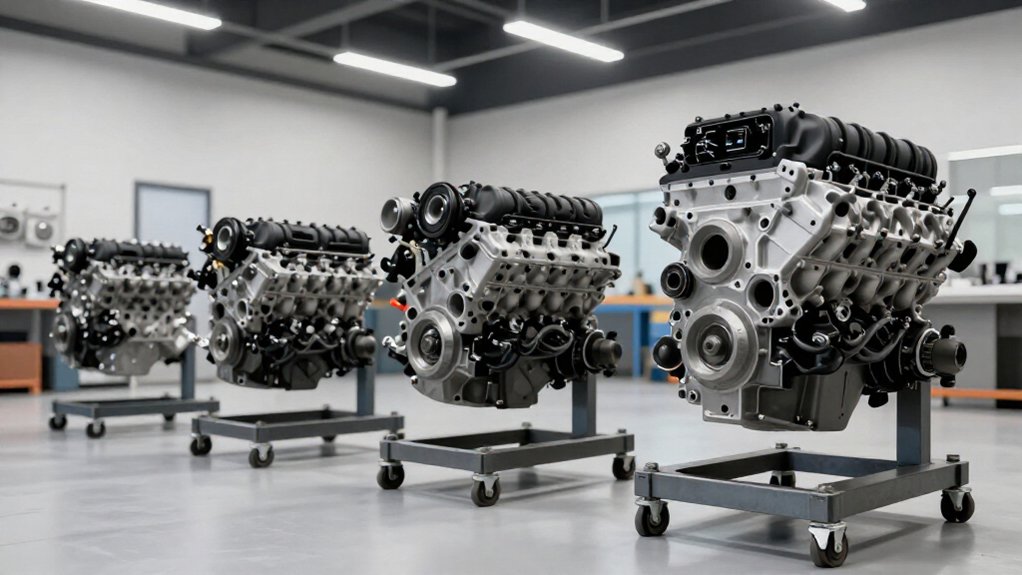
Choose an engine stand rated for at least twice your complete assembly’s weight, not just the bare block. For a roughly 500-pound inline-six, a 1,000-pound stand is a practical starting point; V8s often call for 1,000, 2,000-pound capacity, while heavy diesels or big-blocks may need a geared 2,000-pound model or more.
Include accessories, flywheel, bellhousing, or transmission, and verify actual weight. A wide four-leg base with locking casters adds stability. Check mounting fit, hardware; details matter.
Capacity by Engine Type
Choose an engine stand rated for at least the heaviest load you’ll mount, including any attached transmission or accessories.
A typical DIY small-block-to-midweight build often works with a value stand in the 1,000-pound class. If you’ll keep the transmission or other heavy components installed, size the stand for that complete assembly, not the bare engine.
For diesel or big-block builds, especially fully dressed engines and frequent shop use, choose a heavy-duty geared model around 2,000 pounds; the SUNEX 8300 is one example. A lighter L6, such as a Nissan 240Z engine at about 500 pounds, doesn’t automatically need the largest stand. Instead, check that its four legs provide stable support and that the casters roll smoothly during positioning on your floor.
Stand Capacity Safety Margin
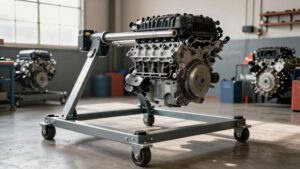
Because rated capacity doesn’t account for every handling risk, select a stand rated for at least twice your engine’s actual weight—about 1,000 pounds for a 500-pound engine. Check the full working load: an attached transmission or major component counts too. Favor a four-leg, wide-base frame with lockable casters; capacity alone won’t prevent tipping as you rotate or push the engine.
| Factor | What to check | Why it matters |
|---|---|---|
| Load | Engine plus attached parts | Combined weight |
| Frame | Four legs, wide base | Resist tipping |
| Casters | Lock and support load | Control movement |
| Rating | About twice engine weight | Added margin |
For larger engines, diesels, frequent repositioning, or long sessions, a 2,000–6,000-pound heavy-duty stand gives you more reserve. Check leg geometry and caster ratings before loading; engine overhang increases leverage quickly.
Engine Weight Measurement Sources
Before selecting a stand, establish the engine’s actual working weight using manufacturer specifications, published assembly weights, or the crate’s shipping sticker, which often reflects the load you’ll lift most closely. For a kit or swap, check the vendor’s documented engine-and-components weight; include the bellhousing or transmission if it’ll remain attached during handling.
Treat online build reports as cross-checks, not specifications, and match the exact model and year. A reported figure for a similar setup may omit accessories that change the lifted load.
If you can, weigh the assembly directly with a truck or bay scale, forklift scales, or a load-cell hoist scale. Record the configuration you measured, including attached parts and fluids, then use that figure as your capacity baseline. Confirm the stand’s rating assumes proper mounting and load distribution, and follow its instructions. Don’t size from a bare-engine estimate when your actual lift includes extra hardware. Keep your scale reading with the job notes.
V8 Versus Inline-Six Weights
You’ll typically find a V8 heavier but more compact than an inline-six, whose length can make it less stable to roll. Include accessories and attached hardware when estimating engine weight, since they affect your stand choice.
Choose a stand with ample capacity headroom, a wide base, and lockable casters, especially for a long inline-six.
Typical V8 Weight
V8 engines are generally heavier than inline-sixes, so don’t size a stand for a V8 using the roughly 500-pound L6 example as your benchmark. V8 weight varies with block material, displacement, and attached parts, so check the engine’s actual weight rather than relying on a generic figure.
For stand selection, treat the 1,000–2,000-pound class as a common starting range for V8 builds, then verify the manufacturer’s rating and your load. Divide the stand’s rated capacity by about two; that gives you a working target and helps preserve margin. Don’t confuse capacity with stability: secure the block, balance it on the head, and keep the stand on a level floor.
V8s are shorter than engines, but their mass makes an undersized stand less forgiving.
Typical Inline-Six Weight
Inline-six engines typically weigh about 400–600 pounds, with roughly 500 pounds serving as a useful estimate for choosing an engine stand. Compared with a V8, an inline-six is generally lighter, but don’t assume every stand will handle it safely. For an engine near 500 pounds, choose a stand rated comfortably above its weight.
A 1,000-pound rating gives you useful headroom; a practical rule of thumb is to keep the load around half the stand’s rated capacity.
Include attached components when estimating the load, since they add weight while the engine remains mounted. Also check stability, not just the capacity label. An inline-six’s length can make it harder to balance and control as you roll the stand. Look for a wide base, preferably a stable four-leg design, and secure the engine at its mounting points.
Engine Configuration Differences
Although a V8 is usually more compact than an inline-six, its weight can climb quickly when it’s fully dressed or still attached to a transmission. An inline-six, such as an L6/240Z-type build, may weigh about 500 pounds, but its length changes how you support it. Its overhang puts more leverage on the stand, so choose a four-leg rolling base with casters rather than judging capacity alone.
A V8’s mounting points sit closer together, concentrating load near the base; the inline-six distributes load across a longer span, making leg and caster stability more critical. Use geared rotation, and lock it before turning; a six can rock as its weight shifts. Choose capacity with a comfortable margin above your estimate, including drivetrain parts left mounted.
Accessories And Weight
Accessories can shift an engine’s weight enough to change your stand choice: common V8s may weigh about 500–1,000 pounds depending on configuration, while an inline-six may be closer to 500 pounds. Those figures aren’t fixed: a bare block, dressed engine, and diesel-ready build can differ substantially.
Before mounting yours, identify what’s staying attached—intake, exhaust, accessories, flywheel, and any transmission—and account for each part. A transmission can add a major load, so don’t estimate from the bare engine if you’ll leave it on the fixture. V8 accessories can push a build toward the heavy end, while an inline-six’s length may create more overhang even when its scale weight is lower.
Weigh the actual assembly when possible, or use reliable component figures. Check accessory brackets and fluid-filled components; small omissions can distort your estimate.
Stand Capacity Considerations
Choose a stand with capacity well above the engine’s actual weight, including any parts that’ll stay attached. Inline-sixes such as a typical L6/240Z often weigh around 500 lb, making a 1,000-lb stand a practical baseline with reserve. V8 weights vary by small- versus big-block; check the assembled engine.
Aim for capacity roughly twice the working load when practical, adding margin for rotation and handling.
Four-leg, wide-base stands are more stable than three-leg designs during frequent repositioning. Long engines and front overhang can raise tipping risk. For heavy big-block or diesel loads, consider a 2,000-lb heavy-duty stand, such as SUNEX 8300 class.
Verify the rating against attached parts before mounting or turning. Keep the load centered and watch for flex.
Include Attached Components
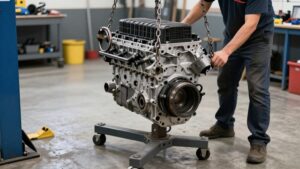
When you size an engine stand, count the bellhousing, flywheel, and any transmission you’ll leave attached, since their weight adds to the load and can increase the tipping force during rotation.
Add those parts to your engine before comparing the assembly with the stand’s rated capacity. If you’ll rotate the engine with a transmission installed, account for its leverage on the base; the extra mass makes the stand work harder during turning and handling.
Keep the complete load well below the rating, and use about half of that figure as a practical target for steadier work under real conditions. For example, a roughly 500-pound L6, plus its bellhousing and flywheel, may suit a 1,000- to 2,000-pound class stand, depending on the parts you retain.
Engine Block Weight Limits
Before mounting an engine, check that the stand’s rated capacity meets or exceeds the block’s weight, with a safety margin for turning and wrenching forces.
Many stands rate from 1,000 to 6,000 lb; choose one that handles the load rather than relying on the bare block figure. A 500-lb engine still calls for capacity if components remain attached.
For a dressed big block or diesel, a heavy-duty 2,000-lb geared stand may suit the combined weight, provided you stay below its limit.
As a check, keep your load at or below half the stand’s rating. That reserve helps account for handling stresses and side loads as you rotate the assembly or apply wrench force. An overloaded stand can tip, collapse, or break hardware. Weigh your assembly before work.
Mounting Arm Reach
Beyond weight capacity, check that the stand’s adjustable arms reach your engine’s mounting points and let you position it level and centered. Before lifting, verify the arm range spans the block’s bolt pattern, then fit the mounting plate squarely against the holes. Use matching arm positions on both sides; unequal extension can leave a long engine, such as a 500-pound L6, with excessive overhang or an off-center load.
Adjust each arm until the engine hangs level, with its center of mass aligned over the stand’s pivot. Choose a stand with wide adjustment and lockable positions. Tighten the locks before rotating, then recheck them.
If the arms can’t reach securely, don’t compensate with improvised spacers; select a stand with suitable reach and plate compatibility.
Crossmember Interference Issues
Check the stand’s legs and locking braces against nearby crossmembers, frame rails, and other obstacles before positioning the engine. A wide four-leg base steadies long blocks, but its spread may foul tight clearances. Bulky branching geometry also consumes floor space and can force an offset approach.
- Check stand leg spread and brace sweep against the vehicle crossmember before rolling the engine into place.
- Compare engine overhang with front casters; long blocks can shift balance and reduce clearance during positioning.
- Map bulky branches on higher-capacity stands; reserve floor space to avoid an awkward offset near rails.
- Trial-place with a hoist, then rotate the assembly slowly to confirm neither stand nor sump contacts structure.
Recheck clearance through the full rotation, not just at the mounting position.
Engine-To-Stand Bolt Grade
Secure the stand’s mounting plate to the engine with grade 8 bolts, or the stand manufacturer’s specified equivalent, to handle the load during lifting and rotation. You’ll also need the correct thread diameter and length for the block; don’t force a mismatched fastener. Tighten each bolt to the engine or stand maker’s torque specification: too little can let the engine shift, while too much can strip threads.
Match the mounting method to your stand:
- Use bellhousing holes when the plate is designed for them.
- Choose block-side adapters when they improve clearance and access.
- Follow specified head-bolt mounting instructions exactly, if applicable.
- Inspect threads, bolts, and adapters; replace rusty, stripped, or damaged parts.
For heavy engines, treat this connection as safety hardware and verify it before rotating the assembly.
Conclusion
Choose a stand by your engine’s fully dressed weight, not its bare block figure. Add a safety margin, and confirm the stand’s rating covers the engine plus accessories. Measure mounting reach and check crossmember clearance before lifting.
Use the correct grade bolts, thread them fully into sound block holes, and tighten them evenly. If weight or fit remains uncertain, consult specs or weigh the assembly. A stable setup protects you, your engine, and your workspace.