How Does an Air Hydraulic Bottle Jack Work? Compressor-Powered Lifting
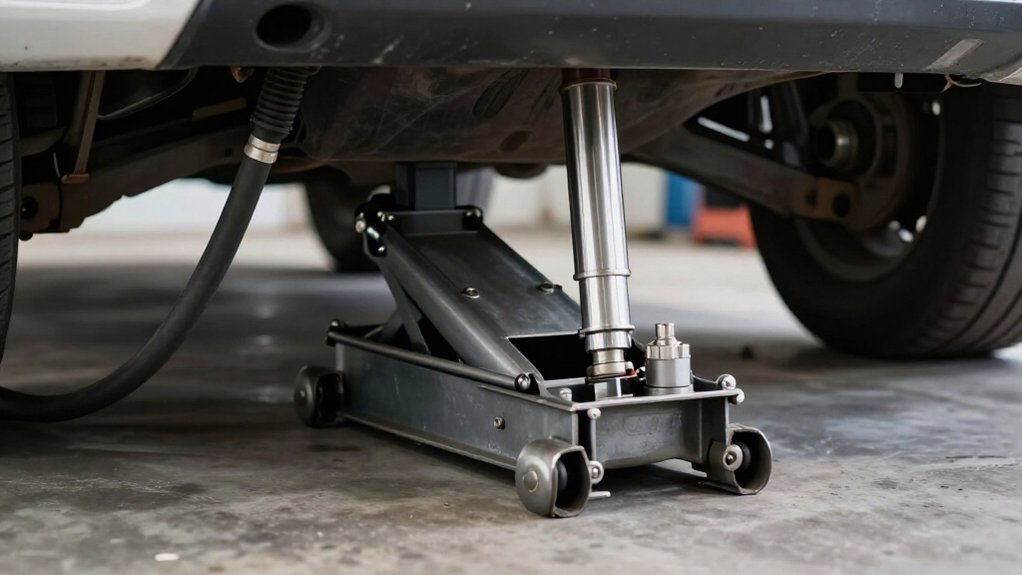
An air-hydraulic bottle jack uses your compressor to power an internal pump.
The pump converts compressed air into hydraulic oil pressure, which enters the main cylinder and extends the ram.
Set the regulator to your jack’s specified inlet pressure and provide adequate airflow.
Keep the release valve closed to maintain the load; open it gradually to return oil to the reservoir and lower the ram.
A relief valve limits excessive pressure.
More checks ensure safe lifting.
Air-To-Hydraulic Conversion
When compressed air enters the jack’s inlet, internal control valves route it to an air-driven pump. The pump converts the air’s pressure into hydraulic oil pressure. You can understand this as a change in working medium: air supplies the input energy while oil carries pressure through the sealed hydraulic circuit.
As the pump cycles, it displaces oil from the reservoir and builds pressure in the main cylinder. A safety relief valve limits excessive system pressure, protecting components from over-pressurization. You shouldn’t treat that valve as the normal pressure-control mechanism; it acts as a protective boundary.
During lowering, opening the release valve lets pressurized oil return to the reservoir so the ram descends in a controlled manner. This conversion separates energy generation from load-bearing action.
Compressor-Powered Hydraulic Lifting
With a suitable compressor connected by hose, compressed air enters the jack’s inlet and powers its internal pump. You’ll need to match the compressor to the jack’s specified minimum operating pressure, often about 90–120 psi, and provide sufficient airflow, measured in CFM, for steady operation. At the inlet, a regulator conditions the supply and directs it to an air motor stage.
The motor drives the pump, which converts pneumatic input into high-pressure hydraulic oil. Check and control valves route this pressurized oil into the main cylinder. As pressure rises there, the ram extends and lifts your load smoothly and controllably. The compressor’s pressure and airflow capacity thus determine whether the jack can maintain its lifting rate under load; inadequate supply can slow or interrupt extension.
Controlled Oil Return
To lower the jack, turn the release valve counterclockwise to vent pressure and open the return path. Pressurized oil then flows from the main cylinder into the reservoir; internal check and control valves block reverse flow during lifting but permit return during lowering. The ram descends as oil drains, not by an uncontrolled drop. How far you open the valve sets the return rate, so adjust it to control descent. After lowering, shut off the compressor and disconnect the air hose; this stops pressure-driven pumping and leaves oil in the reservoir for storage.
| Phase | Oil path | Effect |
|---|---|---|
| Lowering begins | Valve opens return path | Pressure vents |
| Oil returns | Main cylinder to reservoir | Ram descends smoothly |
| Valves govern | Block lift backflow; permit return | Direction stays controlled |
| After lowering | Compressor off; hose disconnected | Pumping stops, oil remains |
Ram and Release Valve
When compressed air drives the hydraulic pump, oil enters the main cylinder and extends the ram upward under regulated pressure. To lower the load, you turn the release valve counterclockwise to return oil to the reservoir. Open it gradually to control ram retraction and prevent a sudden drop.
Ram Extension
As compressed air drives the pump, pressurized hydraulic oil enters the main cylinder and extends the ram upward until the load reaches the desired height or the jack’s operating limit.
You control extension by supplying air; the pump converts that input into oil pressure, which acts on the ram’s effective area to produce lifting force.
| Stage | Hydraulic action | Ram response |
|---|---|---|
| Air supply begins | Pump pressurizes oil | Pressure rises |
| Oil enters cylinder | Hydraulic force acts | Ram extends upward |
As you continue pumping, the cylinder receives additional oil, and the ram advances incrementally. The load’s height depends on delivered oil volume and the jack’s rated stroke, not air flow alone. Stop pumping when you reach the required lift or the limit; don’t exceed the jack’s capacity.
Release Valve Control
After the ram reaches the required height, the release valve controls its descent. During lifting, you keep the release valve closed, retaining oil pressure in the cylinder and holding the ram extended under compressor-driven force. To lower the load, turn the valve counterclockwise to vent trapped hydraulic pressure. As pressure falls, oil returns toward the reservoir and the ram descends.
Make small adjustments, monitoring the load as it shifts; sudden valve movement can cause a rapid drop. Continue controlling the valve until the load is fully lowered. Then close the release valve and shut off the compressor before disconnecting the air hose. The ram moves only as oil pressure leaves through the valve, so gradually release pressure before the jack reaches its lowest position.
Controlled Retraction
Controlled retraction begins when you open the release valve, typically by turning it counterclockwise, so pressurized oil can flow back to the reservoir. The valve meters flow, so the ram descends progressively rather than dropping. As oil leaves the main cylinder, hydraulic pressure falls and the ram retracts under the load.
Don’t treat the ram as a secure holding device: opening the valve changes load height as pressure decreases. Before you work beneath or around a raised load, transfer its weight to jack stands. After lowering, shut off the compressor and disconnect the air hose once pressure has released. Confirm the valve has returned the system to its low-pressure state.
Air Pressure Requirements
Check your jack’s required operating pressure, typically 90–150 psi, and confirm your compressor can sustain it under load. Match the compressor’s CFM output to the jack’s air-consumption rating to prevent slow lifting or stalled operation.
Inspect the hose and regulator for adequate flow and stable pressure at the jack.
Required Operating Pressure
Set the compressor’s regulated output to at least the bottle jack’s specified minimum operating pressure, commonly about 90–120 psi, though some systems run at 120–150 psi.
Check the jack’s manual before connecting it; its rated minimum sets the threshold. A regulator delivers stable pressure at the air inlet; don’t assume the compressor’s tank reading matches inlet pressure.
Below the required pressure, the jack may build inadequate hydraulic oil pressure. You’ll see slow ram movement, stalling under load, or reduced lifting height. Set the regulator within the manufacturer’s specified range and monitor the gauge for fluctuations. Don’t exceed a stated maximum; excess pressure can compromise control or damage components. Confirm requirements for your model before lifting, especially when you’re changing jacks or air sources.
Compressor Capacity and Flow
How well a compressor powers an air hydraulic bottle jack depends on both pressure and airflow. Your compressor supplies air to the jack’s air-driven pump, which pressurizes hydraulic oil. To lift at rated speed, it must maintain the manufacturer’s minimum working pressure while delivering air volume.
Many setups operate around 90–120 psi; use your jack’s specified minimum as the governing value. Pressure alone doesn’t establish capacity: check the jack’s air-consumption rating and compare its CFM demand with the compressor’s continuous output at the required PSI. If airflow is insufficient, pressure may sag under load, slowing the lift or stopping it despite a connected jack. Choose a compressor that sustains the required pressure and provides enough CFM for pump operation.
Hose and Regulator Checks
At the jack’s air inlet, use a sound hose and regulator to maintain the model’s specified pressure, often 90–120 psi, though some jacks require about 120–150 psi. Connect the jack to a compressor that can sustain this pressure under load and provide adequate airflow. If its CFM is insufficient, pressure may fall, making lifting sluggish or incomplete.
Before operation, tighten fittings and reject cracked, deformed, or leaking hose connections; leaks keep the hydraulic pump from developing lift force. Set the regulator to the jack’s input, not an assumed pressure: too little reduces lift speed and height, while excess pressure can open the safety relief. Check the gauge and path for moisture or dirt; contaminated air can impair performance and accelerate seal and valve wear.
Working Beneath Raised Vehicles
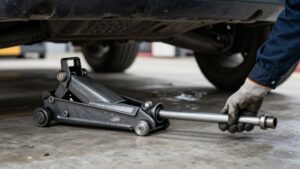
Once the vehicle reaches the desired height, support it immediately with properly rated jack stands; never rely on the air hydraulic bottle jack alone.
Keep the vehicle on level, stable ground and position the saddle at the manufacturer’s approved lift point before pumping. The compressor drives the air-hydraulic pump, which pressurizes oil to extend the ram. Before entering the work area, chock wheels and verify stands sit firmly beneath correct support points. Keep the hose and controls clear of contact or detachment.
| Check | Required condition |
|---|---|
| Ground and lift point | Level; approved point |
| Vehicle support | Rated stands; firm placement |
| Rolling and equipment | Wheels chocked; hose clear |
When lowering, slowly open the release valve to bleed pressure in a controlled manner, while keeping everyone clear nearby.
Overload Protection and Bypass Valves
When load or abnormal operation drives hydraulic pressure above its set limit, the relief valve opens and returns oil toward the reservoir, restricting further ram extension and reducing the risk of seal failure or overpressure. The check valve then holds oil beneath the ram when you release the air supply, preventing backflow and unwanted lowering; it doesn’t replace the relief valve, but lets pressure control remain distinct from load holding.
If a handle sticks or an oil passage blocks, the bypass path gives pressure a safer route to discharge rather than forcing it through vulnerable components. You should match the compressor to the jack’s minimum pressure and adequate CFM. Near capacity, insufficient airflow can prolong demand and make the relief valve vent repeatedly. Treat frequent venting as a sign to reassess load and operating conditions, not as normal lifting behavior.
This limit protects components, but it doesn’t increase capacity or make an unstable load safe; follow its rated limits.
Compressor Hose Leak Checks
Before lifting, inspect the air hose and each coupling—fittings, quick-connects, and clamps—for cracks, abrasion, loose threads, or oily residue that may signal a leak.
With the compressor running, listen at every connection for hissing, then lightly feel along the hose for escaping air. Wear eye protection and keep your hands clear of moving parts. Apply soapy water to suspect joints; growing bubbles confirm leakage.
- Reseat loose connections or replace damaged hose and fittings before use.
- Verify the jack inlet receives its specified pressure, commonly 90–120 psi; compatibility matters.
- Recheck after connecting, then pump briefly; hose movement can expose leaks that appear only under pressure.
Don’t lift until pressure holds and joints remain dry; a leak can keep the jack from reaching lifting pressure.
Checking Hydraulic Oil Level
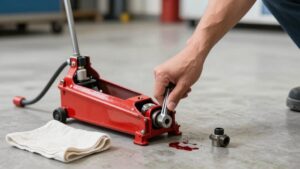
For an accurate oil-level check, fully lower the jack, disconnect the air supply, and release all pressure. Wipe the ram area clean, set the jack on a level, stable surface; otherwise, the reading may be inaccurate. The reservoir sits in cylinder/base. Check the fill/level indicator or dipstick, if fitted, and compare the reading with the manual. If the jack has a fill plug or sight window, keep oil at the specified height or line; don’t exceed the mark.
Inspect oil for milky, dark, or contaminated conditions, which can indicate moisture or breakdown. Change oil showing these signs rather than topping it up. Use the hydraulic oil grade specified in the manual. Check or add oil after pressure’s released and the air supply’s disconnected to prevent hazards and false readings.
Conclusion
An air-hydraulic bottle jack converts compressor air into hydraulic pressure, letting you raise loads with controlled force. You’ll get safe lifting only when you supply the specified air pressure, maintain the oil, check hose connections, and operate the release valve deliberately.
Don’t rely on bypass protection instead of respecting capacity limits, and never work beneath a vehicle supported only by the jack; secure it with rated stands. These checks keep your lift predictable and safer.